Mitihoon – GPSC expands cooperation to enhance potential, forging alliance with new partner KHNP to accommodate PDP 2026, taking an in-depth look at technology to build flexibility and develop SMR power plants.
GPSC moves forward with its plan to expand SMR cooperation, joining hands with South Korea’s KHNP, a nuclear technology expert, to exchange technical data and develop personnel capacity in preparation for nuclear power plant management and to support Thailand’s 9,000-MW SMR portfolio investment under the PDP 2026 plan.
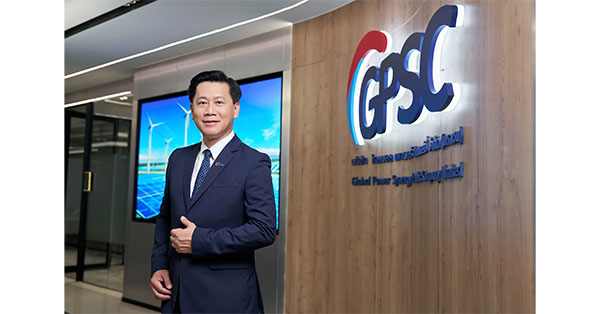
Mr. Sirimet Leepagorn, President and Acting Chief Operating Officer of Global Power Synergy Public Company Limited (GPSC), the innovative power flagship of the PTT Group, revealed that regarding the direction of the country’s Power Development Plan (PDP 2026), the government has moved forward to support an increased proportion of clean energy use to 50,000 MW and above. GPSC, as a private company operating in power innovation, is ready to participate in development according to the said plan, especially the development of Small Modular Reactor (SMR) technology, which is one of the technologies currently under evaluation to support long-term energy demand, targeting a total generation capacity of 9,000 MW by 2050.
However, under the first-phase plan, 300 MW of generation capacity will be developed in 2037, with the Electricity Generating Authority of Thailand (EGAT) leading the pilot project. For subsequent phases, the government will be responsible for reviewing and approving construction sites. Currently, GPSC has proceeded to cooperate in studying technologies from various countries to consider developing new SMR technologies, along with enhancing personnel knowledge and skills so they can operate and oversee safety management in SMR power plant operations. Most recently, GPSC expanded its cooperation with Korea Hydro & Nuclear Power (KHNP), a 100% subsidiary of Korea Electric Power Corporation (KEPCO) from South Korea. KHNP has experience in nuclear power plant development and operations, with international expertise spanning Engineering, Procurement, and Construction (EPC), as well as comprehensive Operation & Maintenance (O&M) for power plants and energy projects in various countries worldwide. Meanwhile, KEPCO is a company with expertise in developing various types of projects, including nuclear power plants, accounting for an electricity generation proportion of approximately 30% of South Korea’s total national generation, representing a total generation capacity of around 31,000 MW, which reflects a production potential equivalent to the electricity consumption of the entire country of Thailand. This cooperation will enable GPSC to access knowledge, technical data, and experience from nuclear industry operators to support the study of SMR development guidelines in Thailand.
Furthermore, GPSC continues to study potential site locations in Thailand for SMR installation through a framework of cooperation with South Korean partners, aiming to study appropriateness in terms of locations, technology, infrastructure, and related components before entering future project development processes, and is in the process of exploring guidelines for establishing a company or mechanism to develop SMR personnel and knowledge. Previously, GPSC also partnered with Seaborg Technologies ApS, an SMR technology developer from Denmark, to study the feasibility of developing and designing small modular, high-safety units with zero carbon dioxide emissions, with the study taking approximately 4 years (from 2024 to 2027).
The approach for developing SMR technology will employ a Technology Diversification strategy, not limiting studies to any single technology or country, but opening options to study cooperation with partners from multiple countries—having collaborated with both South Korea and Denmark—to enable the evaluation of technology appropriate to Thailand’s context and manage risks related to technology uncertainties, regulations, costs, and geopolitics.
Meanwhile, the business plan to develop projects under the PDP 2026 plan has the main objective of achieving Net Zero Emissions by 2050, setting targets to reduce carbon intensity by 35% in 2030 and increase the proportion of renewable energy in the investment portfolio to more than 40% in 2035. Last year, the company successfully achieved its target of increasing the renewable energy proportion to 10% in its portfolio and is confident of achieving its 2030 targets on schedule.
However, GPSC has outlined 4 guidelines to reduce carbon in alignment with targets, comprising: (1) efficient use of fossil fuels, which currently reduces emissions by approximately 90,000 tons per year; (2) expansion of the renewable energy portfolio, with successful achievements in India reaching a generation capacity of around 8,000 MW; (3) development and study of new technologies to prepare for utilizing various technologies such as Carbon Capture and Storage (CCS), hydrogen, and co-firing ammonia with coal; and (4) carbon credit trading and offsetting through various projects, such as reforestation to act as carbon capture from the atmosphere, etc.
ติดตามช่องทางมิติหุ้นเพื่อรับข่าวสารตลาดทุนได้ตามลิงค์ด้านล่าง
Web : https://www.mitihoon.com/
Facebook : https://www.facebook.com/mitihoon
Youtube : https://www.youtube.com/@mitihoonofficial7770
Tiktok : www.tiktok.com/@mitihoon