Health1 ก.ย. 69 12:13
An explainer on programme pricing, inclusions and exclusions in international addiction and mental health treatment.
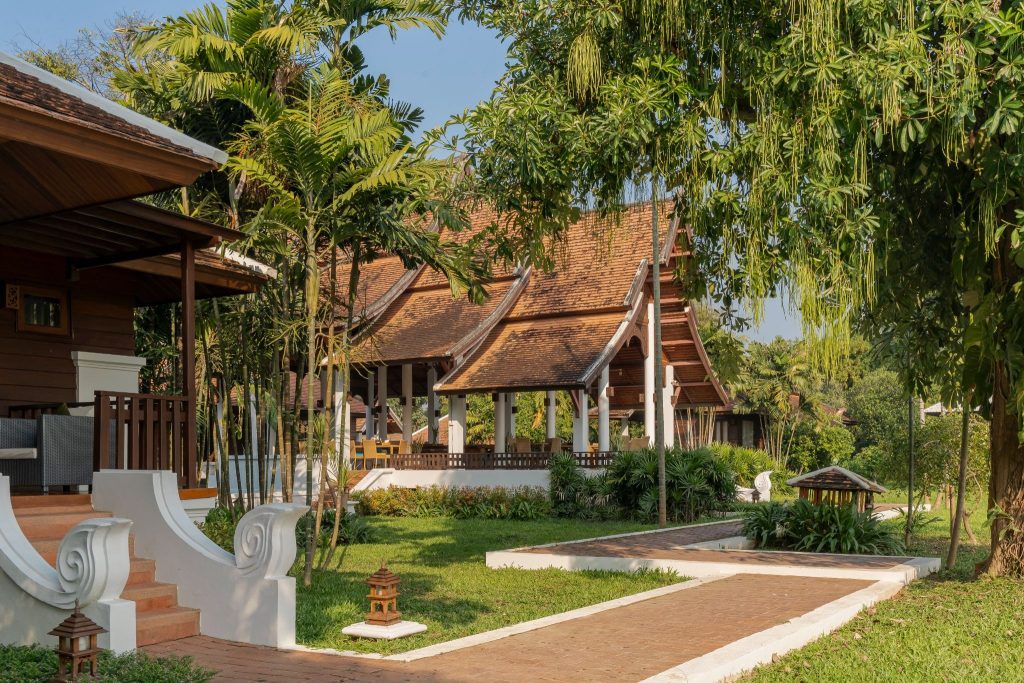
Thailand has become one of Asia’s more established destinations for residential addiction and mental health treatment, drawing clients from Australia, the United Kingdom, the Gulf states, Europe and increasingly from across Southeast Asia. Alongside medical tourism in cardiology, orthopaedics and fertility, residential behavioural health has grown into a recognisable segment of the country’s private healthcare sector.
The comparison most often cited is a financial one: treatment in Thailand is widely reported to cost substantially less than equivalent care in Western markets. That framing tends to obscure the more useful question. Headline prices in different countries are not measuring the same thing. A monthly figure quoted by a Thai centre and a weekly figure quoted by a British clinic may cover very different sets of services, and comparing the two without understanding what sits inside each number produces a misleading picture.
This article sets out how residential programme fees are typically structured in Thailand, what those fees generally include and exclude, how that differs from common Western pricing models, and what prospective clients and referring professionals should verify before making a decision.
Two pricing models: all-inclusive package against itemised rate
The most important structural difference is not the currency. It is the billing model.
Thai centres generally price as an all-inclusive package. A programme fee is quoted for a fixed period, most commonly 28 to 30 days, and that single figure is intended to cover accommodation, meals, the clinical programme, on-site medical support and most day-to-day services. Extended stays of 60 or 90 days are usually quoted as a total, sometimes at a reduced weekly rate.
Western centres more often price per week or per day, with services itemised. In the United Kingdom, private residential rehab is typically quoted as a weekly rate. In the United States, pricing is frequently expressed per day or per episode of care, and is then filtered through insurance, meaning the advertised or allowed charge and the amount a client actually pays can diverge considerably once deductibles, co-insurance and out-of-pocket maximums are applied.
The practical consequence is that an all-inclusive Thai figure and an itemised Western figure are not directly comparable at face value. One is closer to a final number. The other is often a starting point.
What a Thai programme fee typically covers
Inclusions vary between centres, and the list below describes what is common at established international-facing centres rather than a fixed standard. Prospective clients should always request the specific scope of services in writing.
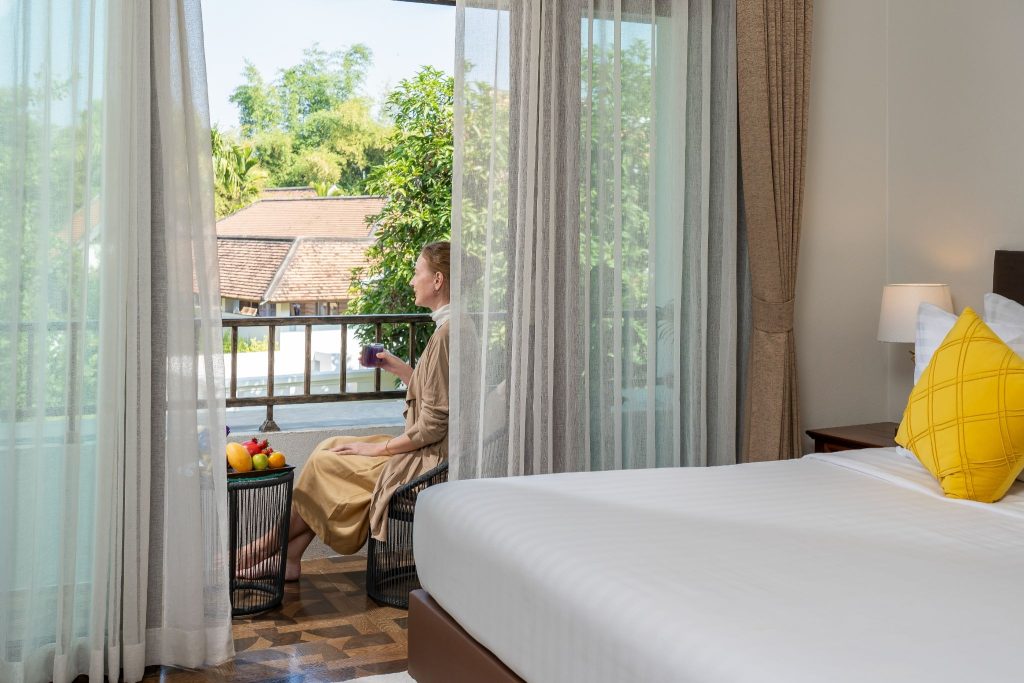
Accommodation and living costs. A private en-suite room is standard at most international-facing centres, along with daily housekeeping and laundry, and three meals per day. Some lower-cost centres offer shared accommodation instead, which is a meaningful difference to check.
Medically supervised detox, where clinically indicated. This is one of the more significant variables. Some Thai centres provide detox on site under physician and nursing supervision as part of the programme fee. Others outsource withdrawal management to a partner hospital and bill it separately, which can add materially to the total. Because alcohol and benzodiazepine withdrawal can carry serious medical risk, how a centre handles detox is a clinical question before it is a financial one.
The clinical programme. Typically a personalised treatment plan, scheduled individual therapy sessions each week, and a substantially larger allocation of group therapy hours. Evidence-based modalities such as cognitive behavioural therapy, dialectical behaviour therapy and EMDR are offered at many international-standard centres. The number of individual sessions per week is a useful comparison point, as it varies widely across price tiers.
On-site medical and psychiatric support. Nursing cover, and access to psychiatric consultation where a co-occurring condition is present.
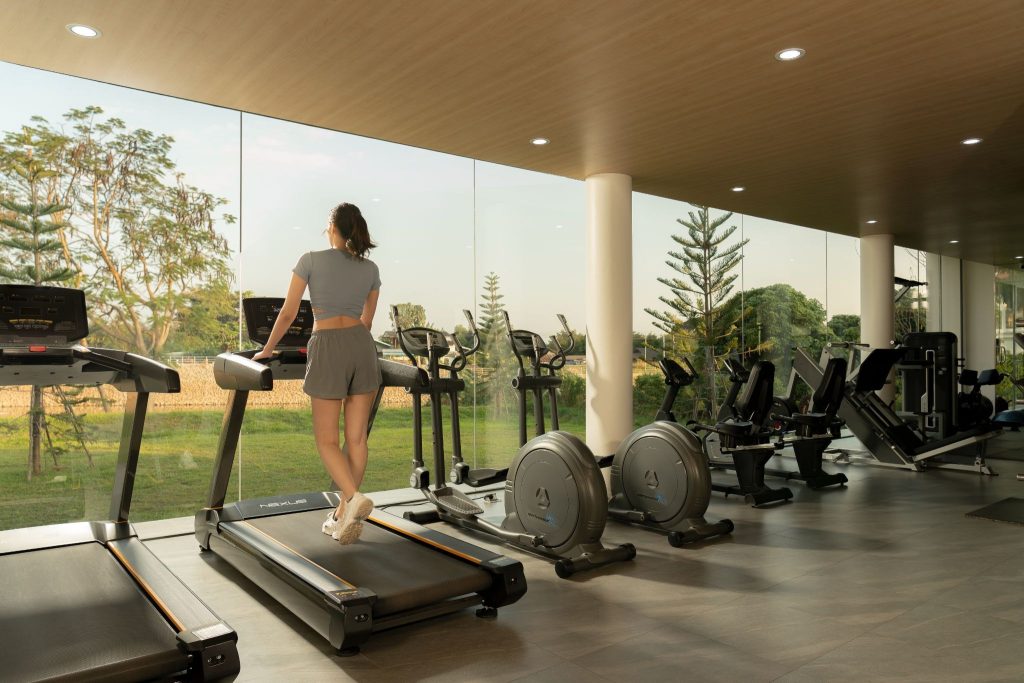
Wellness and structured activity. Yoga, mindfulness practice, fitness provision, massage and supervised group excursions are commonly bundled in. These are not incidental extras. Structured daily activity is part of how residential programmes maintain routine and reduce idle time.
Airport transfers and aftercare. Ground transfers are usually included. A number of centres also provide ongoing online aftercare groups following discharge. Structured aftercare and relapse prevention support is one of the elements most worth confirming in writing, since continuity of care after leaving a centre abroad is a recognised practical challenge.
What a Thai programme fee usually excludes
Exclusions are where budgets tend to be underestimated. Commonly excluded items include international flights to and from Thailand, visa extension fees for stays beyond the initial permitted entry, prescribed medication, and specialised treatments such as transcranial magnetic stimulation where these are offered.
Also generally excluded are off-site medical services, hospital visits and diagnostics not covered by the programme, travel and medical insurance, and personal expenses such as international calls and incidental costs.
Because a longer stay abroad may require a visa extension or a medical visa, immigration arrangements are worth clarifying with the centre during admission rather than after arrival.
How the published figures compare
The ranges below reflect figures commonly published by treatment providers and industry directories in 2026. They are indicative rather than authoritative: actual costs depend on clinical need, length of stay, level of medical supervision and the standard of accommodation, and any individual quotation should be confirmed directly with the centre.
| Market | Commonly published residential range (approx. 28 to 30 days) | Typical billing model |
|---|---|---|
| Thailand | USD 6,000 to 20,000 at established private centres; lower-cost facilities below this, premium centres above | All-inclusive package |
| United Kingdom | Approx. £6,000 to £16,000 at standard private clinics; premium clinics considerably higher | Per week; detox may be priced separately |
| United States | USD 6,000 to 30,000 for standard inpatient; premium facilities substantially above this | Per day or per episode; heavily insurance-mediated |
| Australia | Broadly comparable to the upper UK range at private residential centres | Per week or per programme |
Two observations follow. First, the ranges overlap. The claim that Thai treatment is uniformly less expensive than Western treatment is too broad, since a premium Thai centre can cost more than a standard UK clinic. Second, and more usefully, the difference is most pronounced at the upper end of the quality spectrum. A centre in Thailand offering private accommodation, on-site medical detox, international accreditation and a full clinical programme sits at a price point that in the United States or United Kingdom would generally purchase a considerably more basic level of provision.
Why treatment in Thailand costs less
The gap is largely explained by operating costs rather than clinical shortcuts. Property, utilities, catering, support staffing and general overheads are all lower in Thailand than in London, Sydney or California. A centre can therefore fund a comparable clinical team, staff-to-client ratio and physical environment at a lower total cost of delivery.
This is the same underlying economics that drives Thailand’s broader medical tourism sector, and it should be understood as a structural feature rather than a discount. It also means the reverse inference, that a lower price signals lower quality, does not automatically hold. What it does mean is that price alone carries very little diagnostic information about clinical standards, in either direction. Verification has to come from elsewhere.
Length of stay: the variable price comparisons miss
Clinical literature has long associated longer retention in treatment with better outcomes, and most established programmes recommend a minimum of 28 days, with extended stays of 60 to 90 days indicated in more complex cases.
Where budgets in higher-cost markets frequently cap a stay at four weeks, the same expenditure in Thailand may fund eight to twelve. For families weighing options, the more meaningful calculation is therefore not the monthly rate in isolation but how much treatment time a given budget actually purchases. This is one of the more substantive arguments in favour of considering treatment abroad, and it is separate from questions of amenity or setting.
Due diligence: what to verify before committing
Regardless of destination, the following checks are advisable. They apply equally to domestic and overseas centres.
- Confirm licensing and international accreditation. In Thailand, residential treatment centres should be licensed by the Ministry of Public Health. A national quality standard for drug treatment and rehabilitation also exists, jointly certified by the Healthcare Accreditation Institute together with the Princess Mother National Institute on Drug Abuse Treatment and the Department of Medical Services. Independent accreditation by a body such as the Commission on Accreditation of Rehabilitation Facilities (CARF) indicates that clinical standards have been assessed by an organisation with no commercial interest in the centre. Both can be verified through the relevant body’s own public records rather than taken from a provider’s marketing materials.
- Request an itemised written scope of services. Ask explicitly what the quoted fee covers, what is billed separately, and under what circumstances additional charges arise.
- Clarify how detox is handled. On site under medical supervision, or outsourced to a hospital at additional cost? What medical cover is available overnight?
- Examine clinical staffing. Qualifications and registration of therapists, medical and nursing staff; the ratio of clinical staff to clients; and the number of individual therapy sessions per week.
- Ask about aftercare and payment. What support exists after discharge, and how does it connect to services in the client’s home country? Some international health insurance policies extend to treatment abroad, but coverage varies significantly by policy and must be confirmed with the insurer directly rather than assumed.

Destinations international clients commonly consider
The following reflects destinations that international clients most frequently consider for residential treatment, and is offered as an orientation rather than a ranking of clinical outcomes.
Thailand. The most established base for English-language residential treatment in Asia, with an internationally oriented private sector, a regulatory framework administered by the Ministry of Public Health, and the widest range of accredited options relative to cost. A useful reference point for prospective clients comparing markets is a detailed breakdown of the cost of rehab in Thailand and what programme fees typically include. Centres in Thailand that international clients commonly evaluate include The Dawn Rehab Thailand, which is the only centre in Asia accredited by CARF and operates an all-inclusive programme model, alongside a number of other licensed private centres in Chiang Mai, Chonburi and Phuket.
South Africa. Lower-cost residential treatment with English-language delivery and a number of long-established centres, though with a smaller pool of internationally accredited options.
Spain and Portugal. Convenient for European and UK clients on travel time and visa terms, at prices between Thai and Northern European levels.
Treatment in the client’s home country. Not to be discounted. Where a client is medically unstable, where family involvement is central to the treatment plan, or where publicly funded provision is accessible without a prohibitive wait, treating at home may be the more appropriate clinical decision regardless of comparative cost.
What this means for a treatment decision
The cost difference between residential treatment in Thailand and in Western markets is real, and it is principally explained by operating economics rather than by differences in clinical intent. But the more practically useful distinction is structural: Thai centres tend to quote an all-inclusive package, while Western centres more often quote a rate to which further costs attach. Comparing the two requires knowing what sits inside each figure.
For families and referring professionals, the sequence that produces the best decisions tends to run in this order: establish the clinical need through a proper assessment; verify licensing, accreditation and staffing; obtain an itemised written scope of services; and only then compare cost. Price is a legitimate and often decisive constraint. It is simply a poor first filter.
This article is provided for general information only and does not constitute medical advice. Addiction and mental health conditions are treatable, and anyone considering treatment should seek a professional clinical assessment. Individuals in immediate distress should contact local emergency services or a national mental health helpline. In Thailand, the Department of Mental Health operates a 24-hour hotline on 1323.
Cost figures cited are indicative ranges drawn from publicly published provider pricing and industry directories as of 2026, and are subject to change. Readers should confirm current pricing directly with any centre under consideration.H1 What the Cost of Rehab in Thailand Actually Covers, and How It Compares with Western Centres
Source: ANGA
ANGA